Author Archives: VN Alexander

Permanent announces 2015 titles

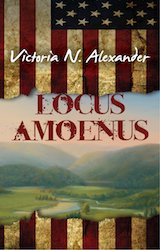
PP-logo__2_The Permanent Press, which will be publishing my novel Locus Amœnus, announced its 2015 titles today.  I am pleased to find myself among some very talented writers.  I am also happy to discover that several of the sixteen novels on the list have anti-war themes; one takes on drone warfare, another economic disparity; a couple of them are pretty quirky; one even invokes Hamlet, as mine does.

I like the company.

From the catalogue:

LOCUS AMŒNUS by Victoria N. Alexander Continue reading →

How can art and science interact meaningfully?

Based on a talk at the Leonardo Art and Science Rendezvous (LASER) meeting in NYC on April 12, 2014, Victoria N Alexander, PhD discusses how art can benefit science through a biosemiotic perspective. This is the second video in the “Science, Art and Biosemiotics” series, produced and directed by Lucian Rex


blank

Victoria N Alexander speaking at NY LASER 4/12/14

laserNY LASER, a Leonardo Education and Art Forum (LEAF) Rendezvous Event
What: Wine + discussion
Where: LevyArts: RSVP for info   info@dactyl.org
When: Saturday, April 12th from 4:00 – 7:00 pm

NYC LASER is a series of lectures and presentations on art and science projects, organized on behalf of Leonardo/ISAST’s LEAF initiative (Leonardo Education and Art Forum).  Former LEAF Chairs Ellen Levy and Patricia Olynyk co-organize these presentations, and Ellen Levy hosts them on behalf of the Institute for Doctoral Studies in the Visual Arts.  There will be three feature presentations by Victoria N. Alexander, Lillian Ball, and Norman Ballard.
 
Victoria N. Alexander is director and co-founder of Dactyl Foundation, whose mission is to “bring the arts into the sciences and the sciences into the arts.”  She earned her Ph.D. in English at CUNY Grad and her dissertation research focused on teleology, evolutionary theory, and complexity science at the Santa Fe Institute.  She is a novelist (Smoking Hopes, Naked Singularity, and Locus Amœnus) and is on the editorial boards of Biosemiotics journal (Springer Press) and Meaning Systems book series (Fordham UP). Alexander’s talk will address the creative process from a biosemiotic perspective and is based on her 2011 book The Biologist’s Mistress: Rethinking Self-Organization in Art, Literature and Nature.
Lillian Ball Lillian Ball is an ecological artist and environmental activist working primarily on water issues. A multidisciplinary background in anthropology, ethnographic film, and sculpture informs her work. She has exhibited internationally and her awards include a John-Simon Guggenheim Foundation Fellowship and a National Endowment for the Arts Grant.  Her recent WATERWASH® public art project series combines stormwater remediation, wetland restoration, and educational outreach in a creative concept that can be adapted to coastal situations worldwide. Lillian will discuss transforming scientific data collected on WATERWASH by Drexel University Environmental Engineering Department into a reflective artwork.
Norman Ballard is an award winning innovator in the use of Laser technology and motion control ‘rayography’ as an artistic medium in the visual and performing arts.   His presentation  ‘Laser: The Ecology of a New Medium’, will reflect on his exploration of the emergent path of this technology and its ongoing cultural assimilation.  He will discuss his breakthrough work over the past 3 decades driving the ascendancy of the laser medium into galleries and collections of fine art museums worldwide, as well as its extension to his current position as Development Coordinator for Production Automation at the Metropolitan Opera supporting its current Production Department Renovation and Technology Upgrade initiative.

The Science of Making Choices

What happens in your body when you choose to go right or left?  What makes your choices? your Self? What does the word “choice” really mean?

VN Alexander, PhD discusses the science of making choices from a complexity science-biosemiotics perspective. From “Science, Art and Biosemiotics” series, produced and directed by Lucian Rex.

To read more about this topic see The Biologist’s Mistress: Rethinking Self-Organization in Art, Literature and Nature. 

blank


Permanent to publish Locus Amœnus!

Great News! My new novel, Locus Amœnus, will be published by Permanent, the same press that did my first and third novels, Smoking Hopes 1996 and Naked Singularity 2003. Help me make this novel a success by going to Amazon.com and posting quick 20-word reviews of my other books and boost my ratings. I am really happy to be working again with Permanent Press editor and publisher, Judy and Marty Shepard, and their new partner Chris Knopf, who have built their small press into an impressive, independent not-quite-so-small press, which, as the New York Times says, publishes some “literary gems” on a “shoestring” budget. I signed the contract today, and they expect the hardcover to be in bookstores early 2015. Advance review copies available soon. I’m looking for blurb writers and reviewers too. Let me know if you want a free e-copy now.

Error: Contact form not found.

Locus Amœnus on “No Lies Radio”

lacoversmallI just sent my manuscript off to the publisher a week ago, and, as luck would have it, I got a call from Andrew Steele, host of  No Lies Radio, asking me to do an interview on the theme of the book.

The program will air Thursday, January 23, 2014

Here’s a summary of the story: In this dark comedy, a 9/11 widow and her son, Hamlet, have retreated from Brooklyn to the idyllic rural countryside upstate, where for nearly eight years they have run a sustainable farm. Unfortunately their outrageously obese neighbors, who prefer the starchy products of industrial agriculture, shun their elitist ways (recycling, eating healthy, reading). Hamlet, who is now 18, is beginning to suspect that something is rotten in the United States of America, when health, happiness and freedom are traded for cheap Walmart goods, Zoloft, endless war, core curriculum, and environmental degradation. He becomes very depressed when, on the very day of the 8th anniversary of his father’s death, his mother marries a horrid, boring bureaucrat named Claudius. Things get even more depressing for Hamlet when his friend Horatio, a conspiracy theorist, claims Claudius is a fraud. The deceptions, spying, corruption, will ultimately lead, as in Shakespeare’s play, to tragedy.
Continue reading →
Why cheap POD books are great for Literary Fiction authors

tornpaperbackUnaware, perhaps, that they no are no longer reaping rewards for their creator, used hard copies of my novels find their ways into online used bookstores and resell and resell.  I am all for recycling, in theory, but not in this particular. Neither publisher nor author gets a cut of used book sales.  What an author can do is buy up all the used copies, which are sometimes priced as low as a penny, and resell them at a higher price.  I have tried my hand at this, but I make a lousy bookseller. I refuse to bubblewrap, doublebox or otherwise over-package books the way Amazon does (they seem to think books are potentially able to explode if jostled in the post), and I don’t get orders in the mail very quickly. Although it might be of some benefit, I’m not too keen on spending a lot of energy learning how to be a bookseller as well as a writer. Gone are the days when some publishing-house intern with nothing better to do took care of things for the pampered writer.  These days most authors, be they with small or large publishers, have to do a lot of their own PR, dealing personally with book stores and reading groups.  I don’t want the added responsibility of resale management. Continue reading →

New Award for Literary Fiction

The greatest fault of literary awards is that they, like the review industry, are largely directed at new writing. There is no reason why the “best” books should be “new” books. Whereas commercial fiction is topical, trendy, and has a very short shelf life, literary fiction is not. If an industry supporting quality writing is to succeed in this changing publishing world, it must distinguish itself from the fashion industry where being “the latest” is every thing. A new philosophy for literary fiction publishing must focus on the maturing title as well as the new one. Continue reading →

What is literary fiction?

Literary fiction is often linguistically difficult, or unusual, in the way that poetry is. It often contains unfamiliar words or supports political, ideological, religious positions that are not widely accepted.  It subverts sentimentality. It makes people think.

Non-fans of literary fiction tend to complain that it sends them to the dictionary (or tries to).  They claim literary fiction is guilty of affectation, a term which seems to have changed its meaning of late:

Main Entry: af·fec·ta·tion

Pronunciation: ˌa-ˌfek-ˈtā-shən
Function: noun

1 :displaying extensive knowledge acquired chiefly from books : demonstrating profound, recondite, or bookish learning

2 :speech or behavior relating to, or characteristic of poets or poetry Continue reading →