Author Archives: VN Alexander

How to pronounce Locus Amœnus, the title of my new novel

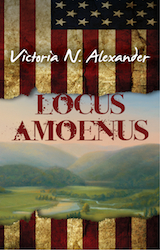
lacoversmallOkay, so maybe picking a Latin phrase, Locus Amœnus, with its weird spelling, for the title of my latest novel might make it a little hard for people to recommend it to friends. (If you  order now from Amazon you can get 13% off.) Locus amœnus can be pronounced in English, Low cuss a men us, with stresses on “low” and “a.” In Latin you want to make “amœnus” sound more like “a moin us.” I have also heard amœnus pronounced “uh mean us.” Any of these are acceptable. This is America, after all.

Locus Amœnus means “pleasant location,” and it’s used in poetry to describe a restful place where nothing bad ever happens. It also happens to be the scene of the crime in many of Ovid’s tales, an idea which fits well with the theme of my novel. I couldn’t pass up this phrase for my title, despite its awkwardness, because the story is set in the rural upstate town of Amenia, a would-be pastoral paradise where I own a sheep farm. The name “Amenia” of course comes from the same Latin word as amœnus. Amenia is, by the way, variously pronounced  as “Uh many uh” or “Uh meanie uh.”


Painter Tarryl Gabel and Locus Amœnus

silo_ridgeThe cover for Locus Amœnus, my new novel which will be out this spring, will feature the painting Silo Ridge by Tarryl Gabel. Gabel is an award-winning local painter, inspired by the Hudson River School, who continues to paint landscapes of this beautiful valley.  Silo Ridge is the name of the old farmland (now a golf course) that is the town of Amenia’s claim to fame. It is one of the most, if not the most, beautiful views in the whole area. When my husband and I were looking for land to purchase, we drove all over the Catskills and Harlem Valley.  When we went round the hill and were presented with this scene, we knew we wanted to make this area our home.

Click on the image for a larger view.

Continue reading

Cover for Locus Amœnus

lacoversmallHere is the final cover design for Locus Amœnus, which will be released at the end of April.   The novel is a dark comedy/tragedy, a revision of Hamlet set in rural upstate New York in 2009.  I requested a graffiti font for the tile to add a bit of irreverence to contrast the pastoral scene.  The designer chose to use a  bullet-holes-and-blood font to make it look like a thriller.  The story does involve an old murder, two accidental deaths, some bloody noses and an allusion to Shakespeare’s heap of bodies at the end of his play, but no one actually gets a mob-style hit in Locus Amœnus.

You can pre-order from Permanent or from Amazon at a  14% discount.

blank

New scientific study reveals that GMOs are safe

scientistThe Central Organization for Regulating Unilateral Protection Today (CORUPT)* released its findings of ten-year study on the effects of genetically modified organisms (GMO) on human health.

A survey, conducted from 2004-2014 of 134,567 U.S. households, found that 98% of the people reported no ill-health effects due to GMO food consumption during the ten-year period. The survey contained ten multiple-choice questions asking participants to report any side-effects experienced directly after consuming any of the five different GMO foods included in the survey. The survey was conducted by land-line telephones between 9AM and 5PM. The households included in the survey were chosen at random from local white pages in Montana, South Dakota, Missouri, Iowa, Ohio, Pennsylvania, Kansas, Mississippi, and Kentucky.

A biased detractor, Harland Loveland, from the Organic Small Farmers Association, cast doubt on the findings, noting that the participants were probably not informed on the issue.

Richard Peters, head of the Central Organization, notes “although most of the people surveyed claimed they had no knowledge of whether or not GMOs were contained in the food they were eating, since most foods do contain GMOs, it’s safe to say that they were consuming nothing but GMO foods. So our findings, that GMO food consumption results in no ill-effects as per the survey findings, remains unchallenged.”

Peters opposes legislation requiring food manufacturers to label GMO products. He maintains that consumers may be “frightened” and “confused” by the information. “We don’t want that to happen,” Peters stated.

James Weasal, head of Marketing for the Industrial Foods Association, optimistically notes that the GMO issue “is just a marketing problem. If this unnecessary and potentially harmful legislation is allowed to go through, we will address the problem head on. We are already developing an exciting campaign with fun and eye-catching labels that say, “GMO Proud,” and “100% pure American GMO,” or “33-percent more GMO, Free” to stress the positivity of GMO foods. As long as consumers see GMO foods in a positive light, we can safely avoid any problems this unnecessary and potentially dangerous legislation could cause.”

-VNA, author of Locus Amoenus


*funded by Wall Street Democrats for Obama (WSDO).

blank

Vegetable Oil: a DiY solution to fossil fuel pollution

thThe fossil fuel industry has an enormous impact on politics, the economy, and our health. This pollution Goliath is just too powerful to fight with government regulations. Take matters into your own hands and put vegetable oil in your fuel tank.

Electric cars will also be a good green choice some day. Unfortunately 44 percent of electricity is generated at coal-burning plants. The new construction of wind farms and run-of-the-river hydroelectric dams to power our super high-efficiency electric cars should be part of our long-term green energy strategy, but such projects require huge start-up funds and massive political support. People who want to help fight environmental pollution and disentangle our politics from the Middle East now — with the technology that is currently available — can run their diesel vehicles on vegetable oil.algaeoil

Although burning vegetable oil does release carbon into the air, this carbon is already part of a natural cycle of plants taking in CO2 from the air and releasing oxygen. When plants decay, the stored carbon is released back into the environment. Burning vegetable oil does not add more carbon into the atmosphere than is already part of the available carbon constantly being recycled. In contrast, the carbon in fossil fuels is brought up from deep below the surface and added to the amount of carbon in the atmosphere. Continue reading

Homeschooling: A DiY Alternative to Public Education

thTop universities actively recruit homeschooled applicants. On average, they test 37 percent above public and private school students and tend to be better prepared for life, career and college. Is it time to rethink our educational system?


When public education was established in the U.S. back in the 19th century, cost efficiency was undoubtedly a primary concern and a main motivating factor. A dozen children could be educated by a single well-qualified teacher for far less than the cost of hiring a private tutor for each family. Today the average cost of education in U.S. public schools is about $12,300 per student per school year. Private school can cost anywhere from $6,000-$50,000 per student per school year. Much of this money goes toward overhead, administration, transportation, insurance, and fringe benefits, not toward teachers’ salaries. In 2014, over 50 percent of families with children in public school were classified as “low income,” e.g. under $37,000 for family of four, under $24,000 for family of two. If the average U.S. family has two children, the cost of educating these children is more than half the family’s entire income. Continue reading

Tired of signing petitions? Read my new do-it-yourself-political-change series

While the world waits for corrupt politicians to pass legislation against political corruption, we can start voting with our dollars to help decentralize and diminish the political-economic powers that control us.

Every Thursday, Digital Journal readers will find a new article in the Do-It-Yourself Political Change series, describing some simple steps that we can take now to be the change we wish to see in the world. If we alter our consumption habits, we stop feeding the beast, and we can spend our time and energy building our local communities and doing the things for one another that the Federal government has promised, but failed, to do, such as clean up the environment, improve education, encourage small businesses, and alleviate extreme economic disparity. We may not have any power as voters (especially if we are given a choice between Hillary and Jeb for U.S. President in 2016), but we do have power as consumers and tax-payers. Our leaders, Right and Left, have abandoned us or been beguiled or blackmailed, and it’s up to us now straighten things out. Read more

Victoria N. Alexander is the author of Locus Amoenus, a 9/11 political satire novel about the decline of America.

blank


Permanent announces 2015 titles

PP-logo__2_The Permanent Press, which will be publishing my novel Locus Amœnus, announced its 2015 titles today.  I am pleased to find myself among some very talented writers.  I am also happy to discover that several of the sixteen novels on the list have anti-war themes; one takes on drone warfare, another economic disparity; a couple of them are pretty quirky; one even invokes Hamlet, as mine does.

I like the company.

From the catalogue:

LOCUS AMŒNUS by Victoria N. Alexander Continue reading

How can art and science interact meaningfully?

Based on a talk at the Leonardo Art and Science Rendezvous (LASER) meeting in NYC on April 12, 2014, Victoria N Alexander, PhD discusses how art can benefit science through a biosemiotic perspective. This is the second video in the “Science, Art and Biosemiotics” series, produced and directed by Lucian Rex


blank

Victoria N Alexander speaking at NY LASER 4/12/14

laserNY LASER, a Leonardo Education and Art Forum (LEAF) Rendezvous Event
What: Wine + discussion
Where: LevyArts: RSVP for info   info@dactyl.org
When: Saturday, April 12th from 4:00 – 7:00 pm

NYC LASER is a series of lectures and presentations on art and science projects, organized on behalf of Leonardo/ISAST’s LEAF initiative (Leonardo Education and Art Forum).  Former LEAF Chairs Ellen Levy and Patricia Olynyk co-organize these presentations, and Ellen Levy hosts them on behalf of the Institute for Doctoral Studies in the Visual Arts.  There will be three feature presentations by Victoria N. Alexander, Lillian Ball, and Norman Ballard.
 
Victoria N. Alexander is director and co-founder of Dactyl Foundation, whose mission is to “bring the arts into the sciences and the sciences into the arts.”  She earned her Ph.D. in English at CUNY Grad and her dissertation research focused on teleology, evolutionary theory, and complexity science at the Santa Fe Institute.  She is a novelist (Smoking Hopes, Naked Singularity, and Locus Amœnus) and is on the editorial boards of Biosemiotics journal (Springer Press) and Meaning Systems book series (Fordham UP). Alexander’s talk will address the creative process from a biosemiotic perspective and is based on her 2011 book The Biologist’s Mistress: Rethinking Self-Organization in Art, Literature and Nature.
Lillian Ball Lillian Ball is an ecological artist and environmental activist working primarily on water issues. A multidisciplinary background in anthropology, ethnographic film, and sculpture informs her work. She has exhibited internationally and her awards include a John-Simon Guggenheim Foundation Fellowship and a National Endowment for the Arts Grant.  Her recent WATERWASH® public art project series combines stormwater remediation, wetland restoration, and educational outreach in a creative concept that can be adapted to coastal situations worldwide. Lillian will discuss transforming scientific data collected on WATERWASH by Drexel University Environmental Engineering Department into a reflective artwork.
Norman Ballard is an award winning innovator in the use of Laser technology and motion control ‘rayography’ as an artistic medium in the visual and performing arts.   His presentation  ‘Laser: The Ecology of a New Medium’, will reflect on his exploration of the emergent path of this technology and its ongoing cultural assimilation.  He will discuss his breakthrough work over the past 3 decades driving the ascendancy of the laser medium into galleries and collections of fine art museums worldwide, as well as its extension to his current position as Development Coordinator for Production Automation at the Metropolitan Opera supporting its current Production Department Renovation and Technology Upgrade initiative.