 NY LASER, a Leonardo Education and Art Forum (LEAF) Rendezvous Event
What: Wine + discussion
Where: LevyArts: RSVP for info info@dactyl.org
When: Saturday, April 12th from 4:00 – 7:00 pm
NYC LASER is a series of lectures and presentations on art and science projects, organized on behalf of Leonardo/ISAST’s LEAF initiative (Leonardo Education and Art Forum). Former LEAF Chairs Ellen Levy and Patricia Olynyk co-organize these presentations, and Ellen Levy hosts them on behalf of the Institute for Doctoral Studies in the Visual Arts. There will be three feature presentations by Victoria N. Alexander, Lillian Ball, and Norman Ballard.
Victoria N. Alexander is director and co-founder of Dactyl Foundation, whose mission is to “bring the arts into the sciences and the sciences into the arts.” She earned her Ph.D. in English at CUNY Grad and her dissertation research focused on teleology, evolutionary theory, and complexity science at the Santa Fe Institute. She is a novelist (Smoking Hopes, Naked Singularity, and Locus Amœnus) and is on the editorial boards of Biosemiotics journal (Springer Press) and Meaning Systems book series (Fordham UP). Alexander’s talk will address the creative process from a biosemiotic perspective and is based on her 2011 book The Biologist’s Mistress: Rethinking Self-Organization in Art, Literature and Nature.
Lillian Ball Lillian Ball is an ecological artist and environmental activist working primarily on water issues. A multidisciplinary background in anthropology, ethnographic film, and sculpture informs her work. She has exhibited internationally and her awards include a John-Simon Guggenheim Foundation Fellowship and a National Endowment for the Arts Grant. Her recent WATERWASH® public art project series combines stormwater remediation, wetland restoration, and educational outreach in a creative concept that can be adapted to coastal situations worldwide. Lillian will discuss transforming scientific data collected on WATERWASH by Drexel University Environmental Engineering Department into a reflective artwork.
Norman Ballard is an award winning innovator in the use of Laser technology and motion control ‘rayography’ as an artistic medium in the visual and performing arts. His presentation ‘Laser: The Ecology of a New Medium’, will reflect on his exploration of the emergent path of this technology and its ongoing cultural assimilation. He will discuss his breakthrough work over the past 3 decades driving the ascendancy of the laser medium into galleries and collections of fine art museums worldwide, as well as its extension to his current position as Development Coordinator for Production Automation at the Metropolitan Opera supporting its current Production Department Renovation and Technology Upgrade initiative.
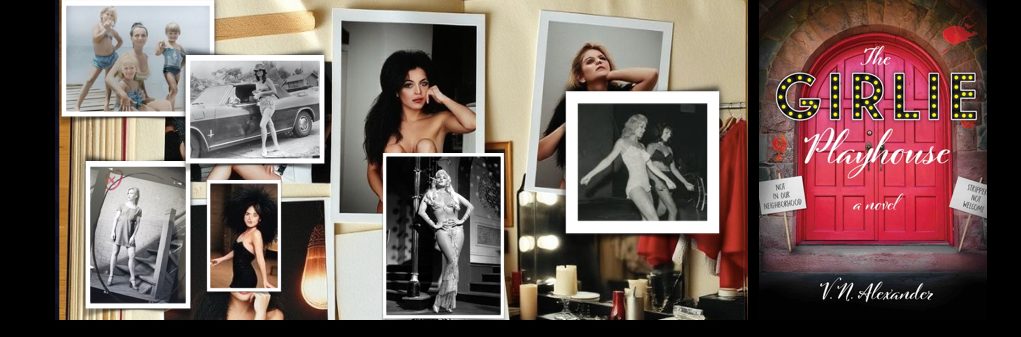
 WEDNESDAY, MAY 11 7 PM FREE
 “….
“….


 My favorite novelist, Vladimir Nabokov, is also my favorite evolutionary theorist. There is a fine line between art and science. In this beautiful coffee-table book, edited by Stephen Blackwell and Kurt Johnson, I have an essay called, “Chance, Nature’s Practical Jokes and the ‘Non-utilitarian Delights’ of Insect Mimicry.”