Tag Archives: nabokov

Kevin T. McEneaney introduces V. N. Alexander at Merritt Bookstore

I was honored to be introduced by Smithfield Valley poet laureate & literary critic Kevin T. McEneaney at the Merritt Bookstore on Friday. Thanks to the wonderful staff for hosting. Extra signed copies are available by contacting orders[at]merrittbookstore[dot]com

McEneaney is the author of three books on American literature (Tom Wolfe’s America: Heroes, Pranksters & Fools, Russell Banks: In Search of Freedom, Hunter S. Thompson: Fear, Loathing, and the Birth of Gonzo) and two books of poetry, The Enclosed Garden and Longing, translated and published in French and dual-language Japanese. Some of his poems have been translated into Croatian, Ukrainian, and Russian, yet at present he remains banned in Russia. He is the author of ten chapbooks and over fifty encyclopedia articles in Encyclopedia Americana. He was awarded the Farrell Award for The Enclosed Garden (1991). Previous winners: AE (George Russell), W.B. Yeats, and Desmond Egan. His profile is in Marquise: Whose Who in America. He writes weekly reviews of classical music at The Millbrook Independent.  Click image to view video. 
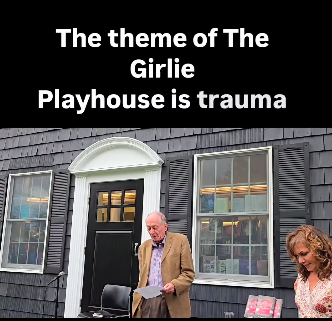


VN Alexander on the Ripple Effect Podcast

Over the course of a 2+ hour interview with Ricky Varandas on the Ripple Effect podcast last week, we discussed:

The effect that AI might have on the arts (my Substack The Posthumous Style is dedicated to critiquing AI and transhumanism).

The fact that Jeffrey Epstein funded the Santa Fe Institute before I was there in the early naughts and why he was ultimately disappointed in the research there. My book The Biologist Mistress was written at SFI. That convo starts around :30.

Close to the hour mark, we talk about how conspiracy theories are becoming mainstream due to the partial Epstein file release, my 9/11 truth novel Locus Amoenus, and about solutions to the current political mess.

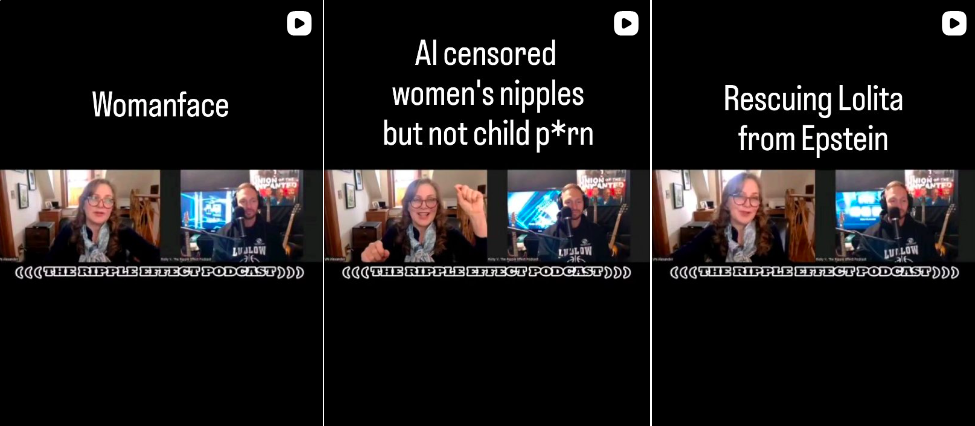
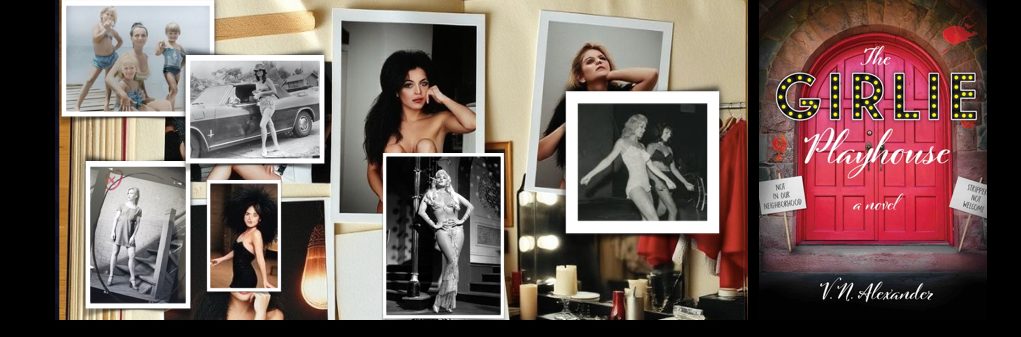
Near the end, we discuss The Girlie Playhouse, Nabokov, who was my biggest influence for that book, and how female sexuality is censored while child porn is not. Here are three 3-minute clips that feature The Girlie Playhouse:

Full interview:
VIDEO on Your Tube 
AUDIO on Podomatic

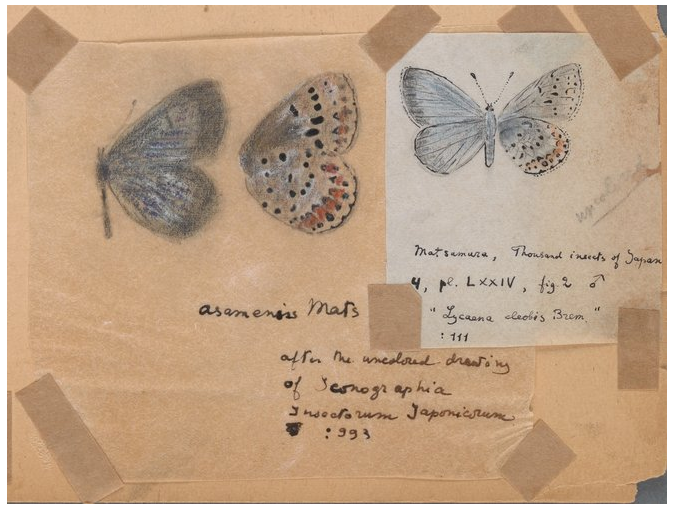
The Artist as Scientist: Nabokov and Insect Mimicry, talk by VN Alexander

It’s a commonplace to say that good science requires imagination, yet scientist aren’t really encouraged to read poetry or to take up painting. Maybe they should. This talk presents the example of Vladimir Nabokov, renown Russian-American novelist and butterfly scientist who used his artistic knowledge to understand how evolution can work. He went against the prevailing theories of his day and was attacked for being unscientific, but recently some of his work has been vindicated by DNA analysis, showing that his artistic guesses were amazingly accurate and precise.

Nabokov didn’t think natural selection, a mere proofreader with no real creative powers, could make a butterfly look exactly like a dead leaf, complete with faux fungus spots. He didn’t think natural selection had gradually made the tasty Viceroy species butterfly look like the bitter tasting Monarch, allowing it to survive better. Although he believed that natural selection had shaped many of nature’s forms, he thought the one thing natural selection could not create was mimicry, which could be better explained by other natural mechanisms. This heresy infuriated scientists who thought insect mimics were the best illustration of the gradual powers of selection. More than fifty years later, Nabokov’s genius is finally being recognized. What was it about Nabokov’s way of thinking that allowed him to see what others could not? And how did his understanding of nature inspire his fiction?

Talk based on “Chance, Nature’s Practical Jokes, and the “Non-utilitarian Delights” of Butterfly Mimicry” by V N Alexander, in Fine Lines: Vladimir Nabokov’s Scientific Art. Eds. Stephen Blackwell and Kurt Johnson. New Haven: Yale University Press.

2016 Top 20: Fine Lines: Vladimir Nabokov’s Scientific Art

The Book/Arts blog of the prestigious journal Nature has included Fine Lines in its top 20 book list for 2016.

natureblog


Fine Lines was also review in Doppiozero in Italy, Haibun in Romania, and science and art blog, and made the top 20 list bioteaching.com

doppiozero


haibunscienceandart

bioteaching