Tag Archives: why we read fiction

Locus Amœnus on “No Lies Radio”

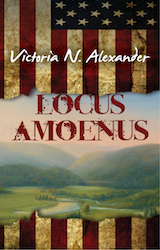
lacoversmallI just sent my manuscript off to the publisher a week ago, and, as luck would have it, I got a call from Andrew Steele, host of  No Lies Radio, asking me to do an interview on the theme of the book.

The program will air Thursday, January 23, 2014

Here’s a summary of the story: In this dark comedy, a 9/11 widow and her son, Hamlet, have retreated from Brooklyn to the idyllic rural countryside upstate, where for nearly eight years they have run a sustainable farm. Unfortunately their outrageously obese neighbors, who prefer the starchy products of industrial agriculture, shun their elitist ways (recycling, eating healthy, reading). Hamlet, who is now 18, is beginning to suspect that something is rotten in the United States of America, when health, happiness and freedom are traded for cheap Walmart goods, Zoloft, endless war, core curriculum, and environmental degradation. He becomes very depressed when, on the very day of the 8th anniversary of his father’s death, his mother marries a horrid, boring bureaucrat named Claudius. Things get even more depressing for Hamlet when his friend Horatio, a conspiracy theorist, claims Claudius is a fraud. The deceptions, spying, corruption, will ultimately lead, as in Shakespeare’s play, to tragedy.
Continue reading

New Award for Literary Fiction

The greatest fault of literary awards is that they, like the review industry, are largely directed at new writing. There is no reason why the “best” books should be “new” books. Whereas commercial fiction is topical, trendy, and has a very short shelf life, literary fiction is not. If an industry supporting quality writing is to succeed in this changing publishing world, it must distinguish itself from the fashion industry where being “the latest” is every thing. A new philosophy for literary fiction publishing must focus on the maturing title as well as the new one. Continue reading

What is literary fiction?

Literary fiction is often linguistically difficult, or unusual, in the way that poetry is. It often contains unfamiliar words or supports political, ideological, religious positions that are not widely accepted.  It subverts sentimentality. It makes people think.

Non-fans of literary fiction tend to complain that it sends them to the dictionary (or tries to).  They claim literary fiction is guilty of affectation, a term which seems to have changed its meaning of late:

Main Entry: af·fec·ta·tion

Pronunciation: ˌa-ˌfek-ˈtā-shən
Function: noun

1 :displaying extensive knowledge acquired chiefly from books : demonstrating profound, recondite, or bookish learning

2 :speech or behavior relating to, or characteristic of poets or poetry Continue reading

What is Literary Fiction?

Literary fiction is often linguistically difficult, or unusual, in the way that poetry is. It often contains unfamiliar words or supports political, ideological, religious positions that are not widely accepted.  It subverts sentimentality. It makes people think.

Non-fans of literary fiction tend to complain that it sends them to the dictionary (or tries to).  They claim literary fiction is guilty of affectation, a term which seems to have changed its meaning of late:

Main Entry: af·fec·ta·tion

Pronunciation: ˌa-ˌfek-ˈtā-shən
Function: noun

1 :displaying extensive knowledge acquired chiefly from books : demonstrating profound, recondite, or bookish learning

2 :speech or behavior relating to, or characteristic of poets or poetry

Continue reading

The Choice Issues in the Health Care Bill: eating meat and reading literature

Two extremely important issues–that are not strictly health related–are holding up the health care bill. These are: whether the government should help fund abortions and whether the government should help fund end-of-life consultations between patients and physicians. Anyone who knows my novels knows that I’m a feminist and so would expect me to support Pro-Choice, and I do. Anyone who has read Naked Singularity knows that I would fight for choice on the issue of euthanasia too. Nevertheless, I think both should be withdrawn from the bill. Here’s why: Continue reading